清真Halal · Vietnamese & Thai food
Halal bo bun, pad thai, pho: is Vietnamese and Thai cuisine really halal?
10 min read
Stewed and stir-fried Asian dishes hide more halal pitfalls than sushi: broths, fish sauces, cooking wines, hidden meats. Bo bun, pad thai, pho, nems, fried rice — we review the menu dish by dish to say exactly what passes and what does not.
要In short
Key takeaways
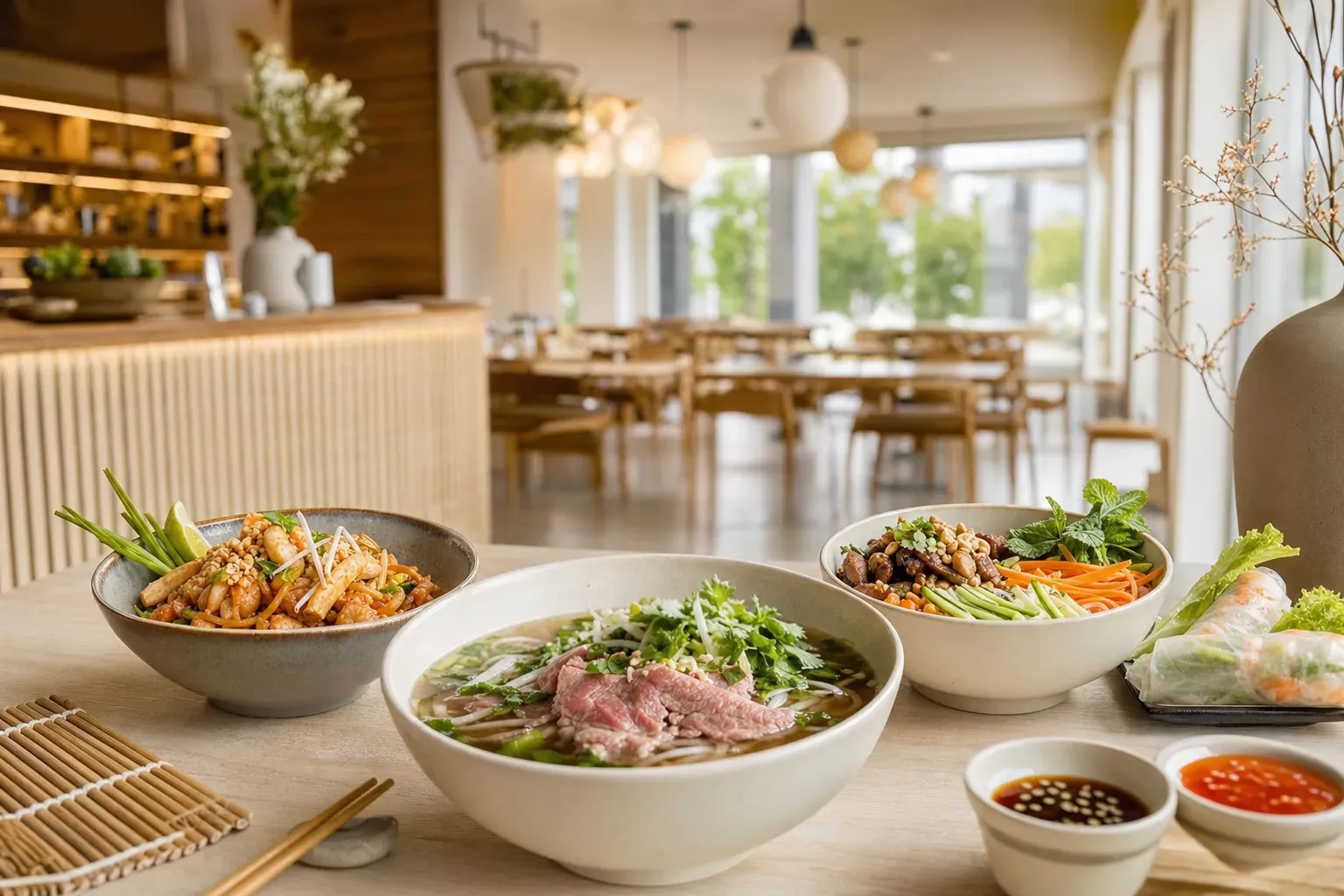
Bo bun, pad thai and pho can all be halal: their core (vermicelli, grilled beef, beef-bone broth, rice noodles, herbs) is fine. The real risks are pork slipped into fried rice or a nem filling, rice wine or sake poured into some woks, and shrimp paste sometimes cut with alcohol. Nuoc-cham is a fermented fish sauce with no alcohol. At Sushi & Nem in Thonon, the entire Vietnamese and Thai side is cooked pork-free with halal meats.
Sushi is simple: raw fish, rice, vinegar. Vietnamese and Thai dishes are stewed, stir-fried and layered, with dozens of ingredients — a broth base, a spoon of sauce, a garnish — that slip under the radar.
The pitfalls fall into three families: meat (mainly pork), cooking alcohol, and fermented seafood sauces. This guide reviews each major dish and says what makes it halal, from the point of view of a restaurant family, not a sermon.
Is bo bun halal?
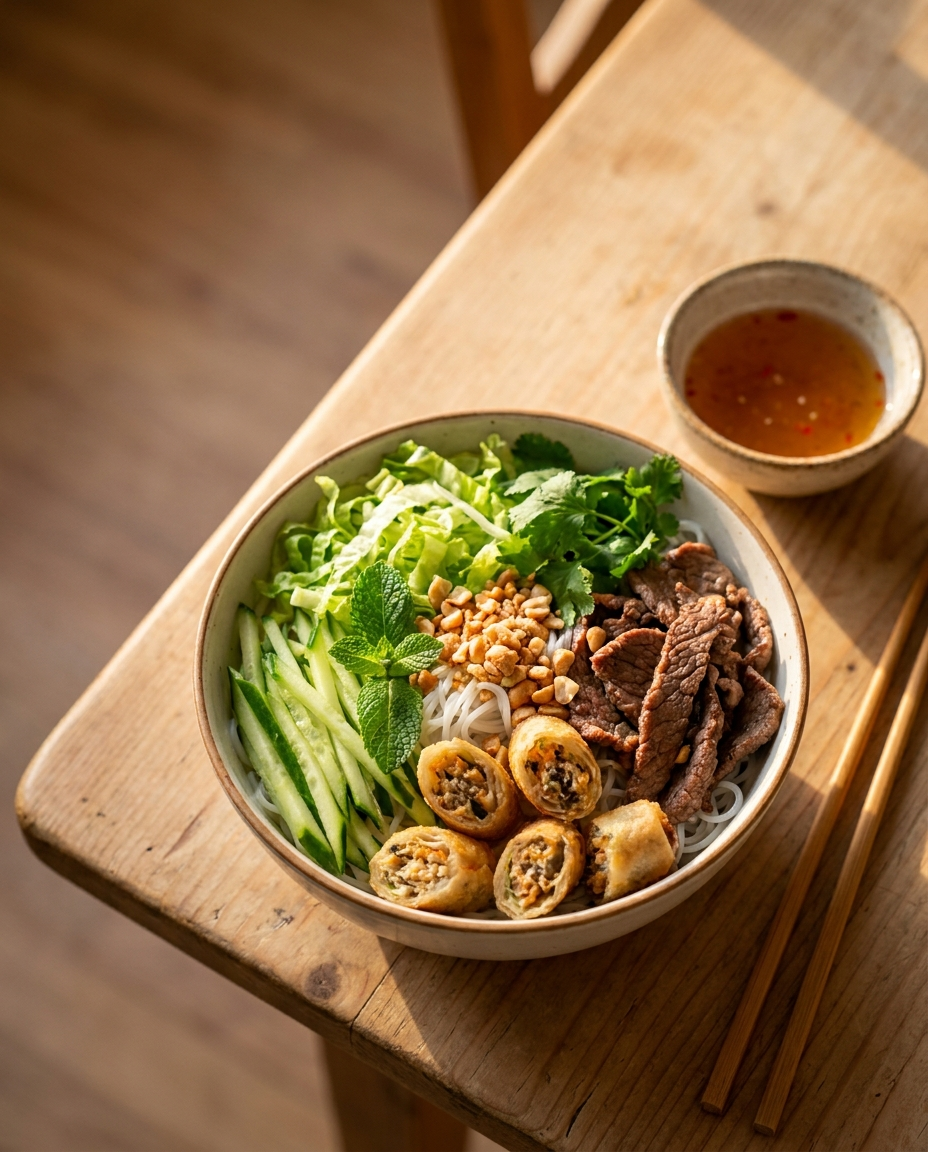
Bo bun means beef-vermicelli: its base — cold vermicelli, salad, herbs, lemongrass beef — has no pork or alcohol. It works equally with chicken.
Two details: the crumbled nem on top must be pork-free (chicken is ideal), and the nuoc-cham sauce is a fermented fish sauce with no alcohol. At Sushi & Nem, our bo bun is halal chicken or beef with a chicken nem.
Pad thai: sauce, protein and points to check
Quick verdict
Chicken or shrimp pad thai, without pork or alcohol-stabilised shrimp paste, is halal. Check the protein and the exact sauce.
Pad thai is rice noodles stir-fried with tamarind sauce, palm sugar, egg, bean sprouts and peanut — none of it problematic. It contains fish sauce, fermented but alcohol-free.
Check the protein (chicken, shrimp or tofu instead of pork) and that no shrimp paste or oyster sauce cut with alcohol is added. A house-made sauce avoids the issue.
Can pho be halal? It all comes down to the broth
Pho is above all a broth, spiced with star anise, cinnamon and ginger, over rice noodles and thin beef. Traditional pho uses beef bones and is naturally compliant.
The only risk is a shortcut broth boosted with pork. All the spices and fresh garnishes are plant-based. A beef-bone pho with no pork is a complete halal dish.
Nuoc-cham and fish sauce: is there any alcohol?
The worry
Fish sauce and nuoc-cham come from fermenting fish and salt, with no added alcohol. Alcohol, when present, comes from rice wine, sake, mirin or shrimp paste.
Fish fermentation is not alcoholic fermentation: it produces no ethanol. Nuoc-cham (fish sauce, lime, sugar, garlic, chilli) contains no alcohol.
Alcohol hides in Shaoxing rice wine, sake or mirin used to deglaze woks or marinate meat. A kitchen that swaps these for broth or rice vinegar avoids it entirely.
Nems and rolls: frying, filling and rice wrapper
The rice wrapper (rice flour, water, salt) is fine. Fresh spring rolls are almost always halal unless they contain pork or cured meat.
The pivot is the filling and the frying: a pork nem is not halal, a chicken or shrimp one is; a dedicated frying oil or a pork-free kitchen removes doubt.
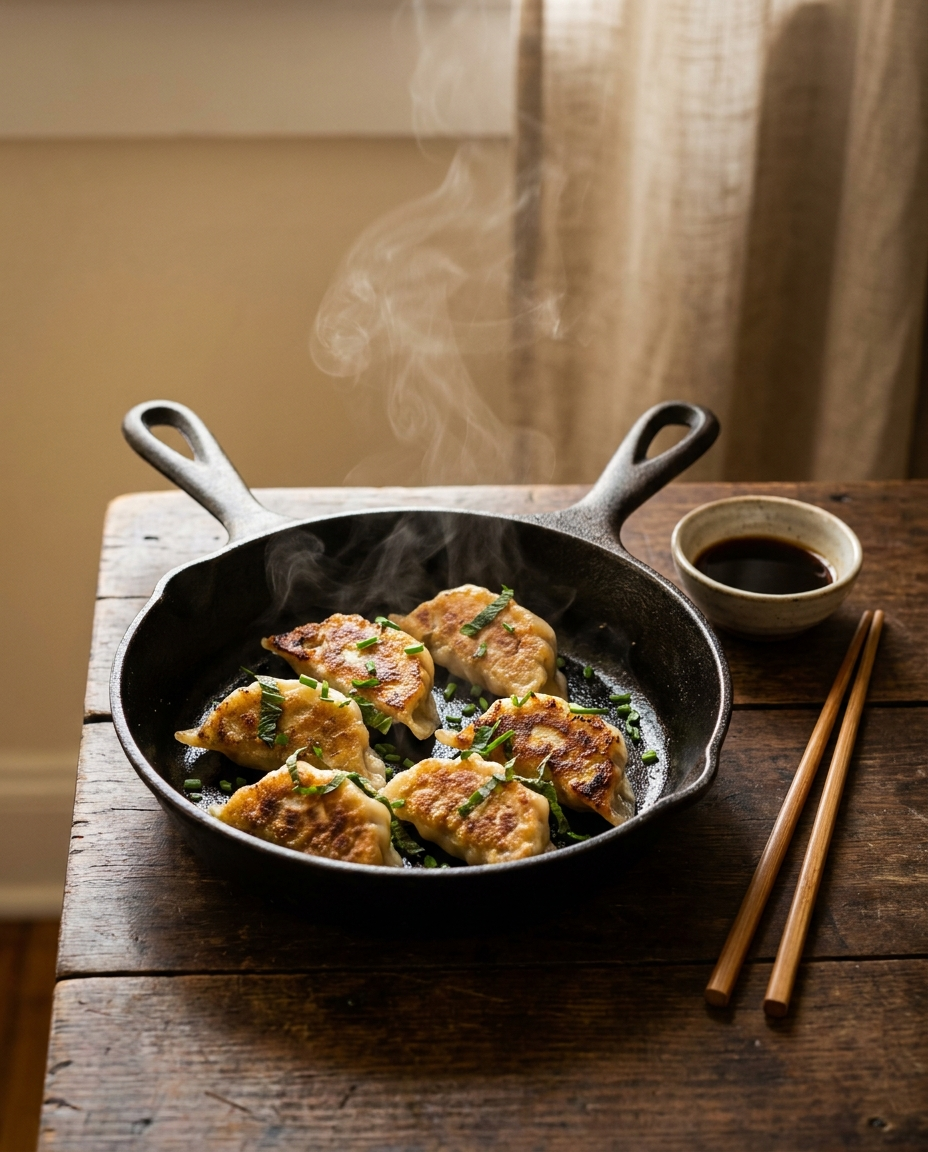
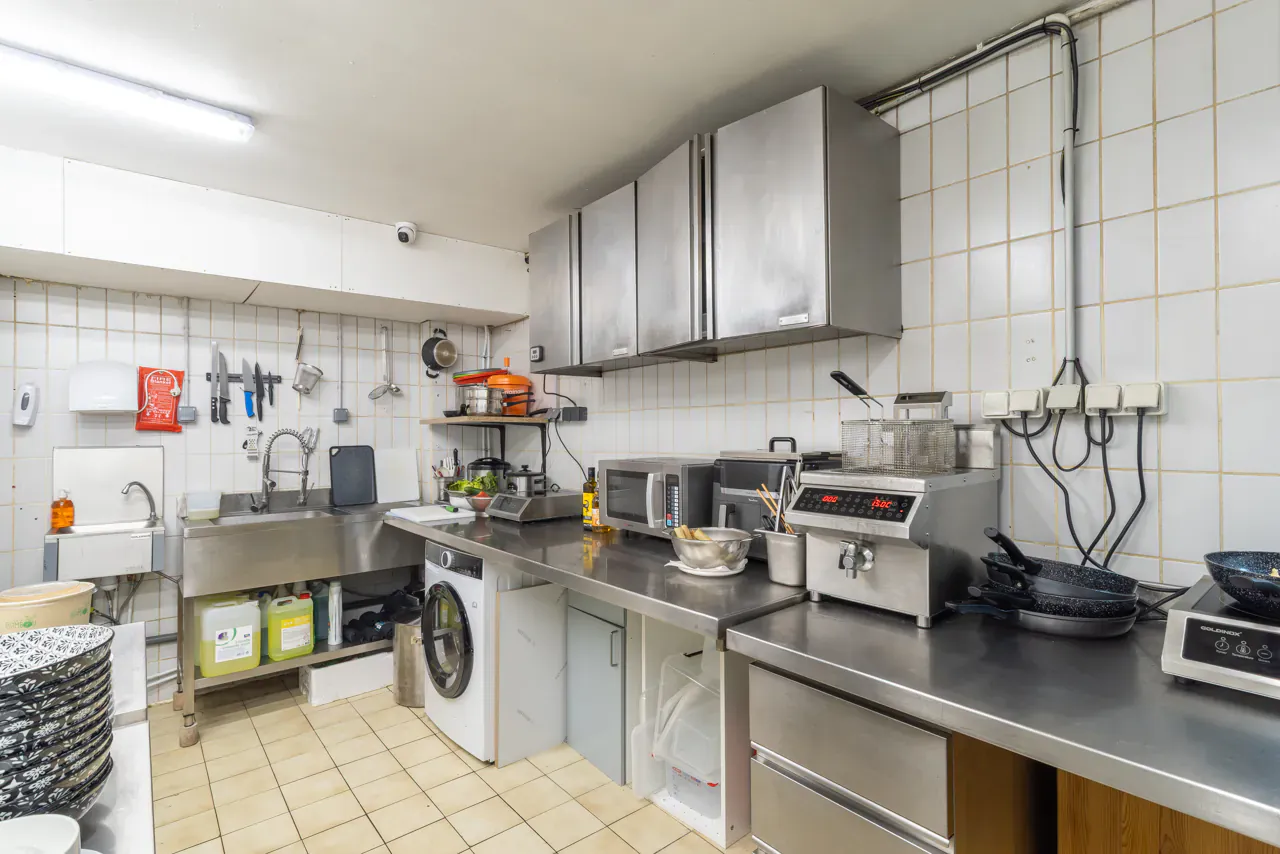
炒The wok
Fried rice and stir-fries: the pork and alcohol blind spot
Classic Cantonese fried rice contains pork by default — the true blind spot. A plain, chicken, beef or shrimp fried rice is the halal version.
Many stir-fries deglaze with rice wine or sake. Swapping it for broth, rice vinegar or soy sauce keeps the flavour without alcohol.
Ordering halal Asian food with confidence
Three short questions cover the essentials in any Asian restaurant.
- 01
Ask about the meat
Chicken or beef? Any pork? Pork is the only common issue and clears most doubt.
- 02
Ask about sauces and broths
Is the pho broth beef-based? Any rice wine or sake in the woks? Fish sauce is not an alcohol concern.
- 03
Beware mixed menus
A menu listing pork often shares fryers and woks. A fully pork-free kitchen is easier to verify.
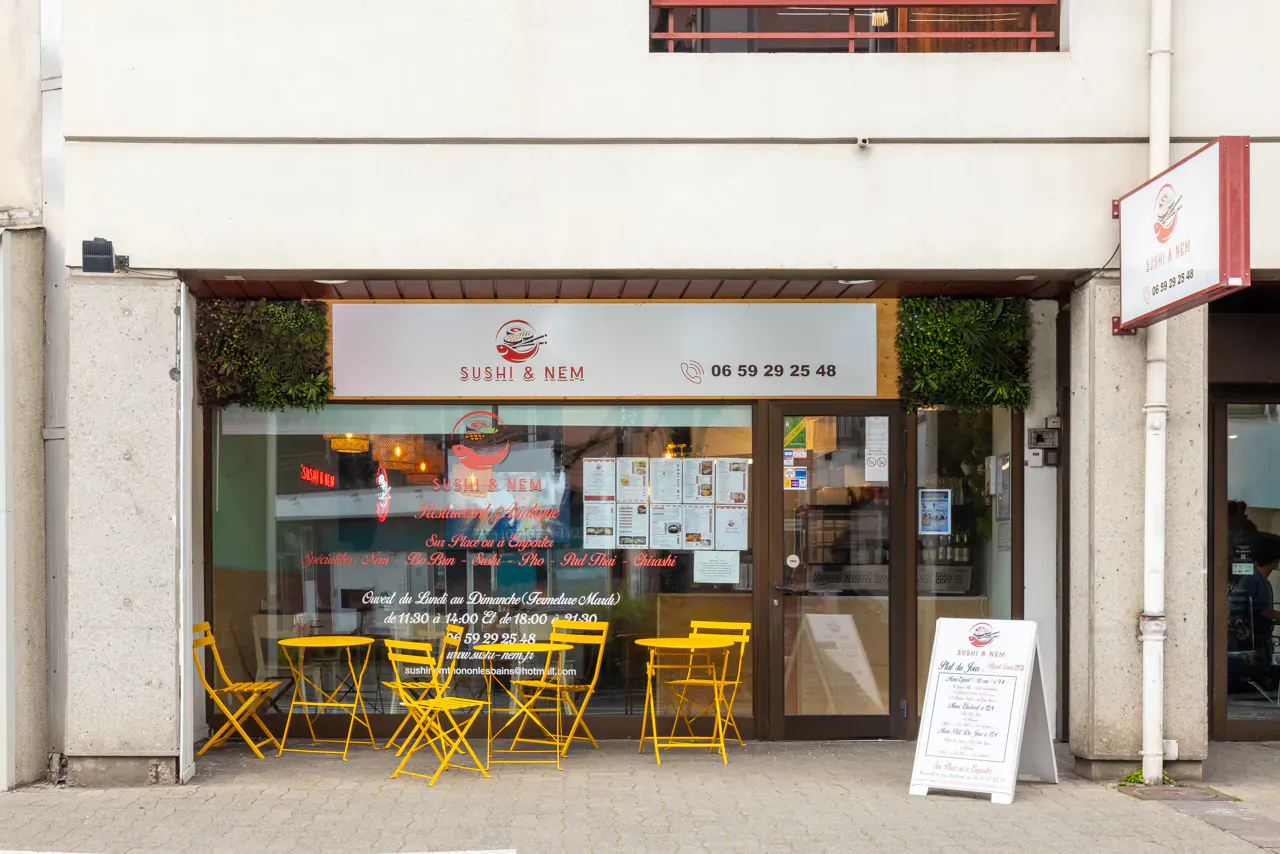
家The house
At Sushi & Nem in Thonon: 100% pork-free viet & thai
Our menu has no pork; meats are halal chicken or beef. Chicken nems, chicken or beef bo bun, chicken/shrimp/tofu pad thai, fried rice without lardons, house sauces with no cooking alcohol.
You don't have to play detective at the table: doubts about pork, shared fryers or wok wine are settled in the kitchen. See the full menu and our Asian cuisine in Thonon.
Find the full context of our Asian cuisine in Thonon and where each dish fits.
質問Your questions
FAQ about halal Vietnamese & Thai food
Does nuoc-cham contain alcohol?
No. It derives from fish sauce, made by fermenting fish and salt, which produces no alcohol. Lime, sugar, garlic and chilli are not alcoholic either.
Is the Sushi & Nem pad thai halal?
Yes. It comes with halal chicken, shrimp or tofu, no pork, and a tamarind-based sauce with no cooking alcohol.
Is pho halal?
It can be. A beef-bone broth with beef garnish and no pork additive is halal. Just check the broth is beef-based.
Do your nems contain pork?
No. Our nems are chicken and the menu is pork-free, so the frying is never shared with pork.
Can you eat Vietnamese halal in Thonon?
Yes. Sushi & Nem cooks its Vietnamese and Thai dishes pork-free with halal meats. Dine in, takeaway at 06 59 29 25 48 or delivery.
Can fried rice be halal?
Classic Cantonese rice has pork, so not by default. But plain, chicken, beef or shrimp fried rice without lardons or rice wine is fully halal — that is our version.
案内Go further
The pillar and related articles
This fits into our full Asian cuisine. The best starting point is the pillar page: bo bun halal — nems, wok, fried rice and viet & thai dishes in Thonon.
Related pages